


As the fall season approaches, anglers and visitors to Cape Cod should begin planning for the dynamic period when striped bass and bluefish often overlap near Chatham and across Nantucket Sound. This transitional window can produce some of the most action-packed days of the year, but it also brings shifting conditions that reward preparation, flexibility, and local knowledge. Now is the time to begin planning a trip that balances the gear, bait, and expectations needed for mixed-species days.
On many fall outings, you’ll see blitzing bait schools, aggressive bluefish on the surface, and cruising stripers that may sit deeper or follow the edges of the same bait. Understanding how these species behave together will help you choose the right rods, leaders, and presentations to capitalize on both. Planning ahead—especially when booking a charter out of Chatham—lets you match boat time, location, and crew experience to the conditions expected in Nantucket Sound and nearby waters.
Realistic expectations matter: mixed schools mean fast action some minutes and quiet patches the next. Safety, conservation, and respect for local regulations are part of every successful charter. This article explains how overlapping striped bass and bluefish schools affect tackle and bait selection, how to set practical expectations for mixed-species days, and how to plan a charter to make the most of changing fall conditions.
Why Striped Bass and Bluefish Often Co-occur Near Chatham in Fall
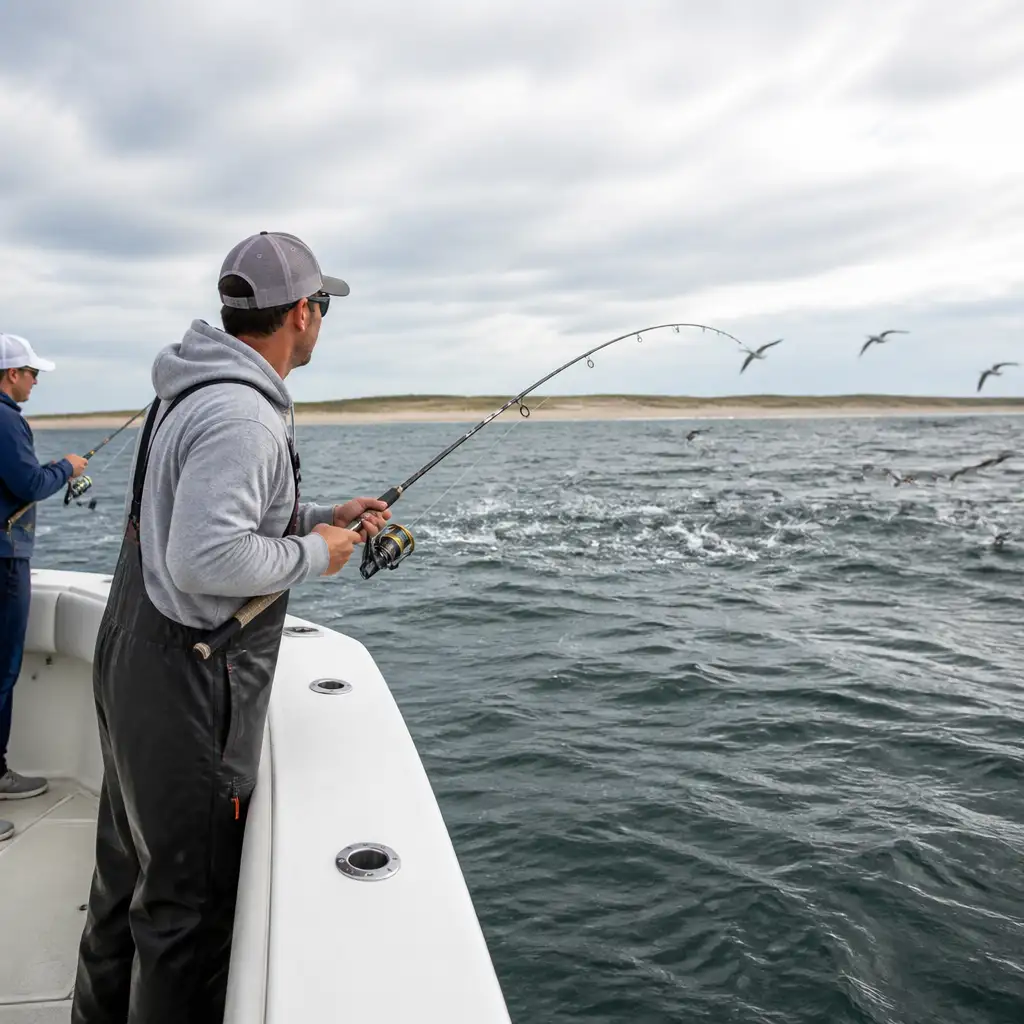
As water temperatures drop in late summer and into fall, baitfish begin to move and concentrate in predictable ways. Larger schools of bunker, herring, and small sand eels can push toward the edges of Nantucket Sound and into channels near Chatham, drawing both striped bass and bluefish. Bluefish are often the first to hit a concentrated baitball, feeding aggressively on the surface; stripers may feed more deliberately, working the edges or following bluefish pressure into troughs and gullies.
Nearshore structure, tidal rips, and currents around points and sandbars in Chatham create ambush zones where both species find easy feeding. Vineyard Sound and other nearby waters can slice through these concentrations, so fishing can shift quickly from one sound to another. Experienced charter skippers watch bait movement, current lines, and bird activity to locate these mixed schools rather than relying on a single hotspot.
Looking ahead to the upcoming season, anglers should expect this overlap to produce intense, short-lived feeding windows. It’s not unusual to see surface blitzes one minute and calm, deep-water feeding the next. The presence of both species on the same bait field changes how you approach tackle selection and presentation: you need gear that can handle the toothy bluefish and the hard-pulling stripers without sacrificing sensitivity or presentation quality.
How Mixed Schools Change Tackle Choices for Striped Bass and Bluefish
When bluefish and stripers are together, a balanced tackle setup is essential. Bluefish have sharp teeth and a tendency to cut through monofilament leaders; stripers can run and test light tackle. For many anglers, a medium-heavy spinning or conventional rod in the 7–8 foot range paired with a 4000–6000 size reel provides the strength and line capacity needed for nearshore work. Use braided mainline in the 20–40 lb range for abrasion resistance and low stretch, which helps with long runs.
Leaders are where mixed-species trips diverge. For primarily striper days you might use a fluorocarbon leader in the 20–30 lb range; add a short section of wire or heavy fluorocarbon (30–60 lb) when bluefish are plentiful to avoid cut-offs. Many captains prefer using quick-change leaders or trace setups so you can switch from mono/fluoro to wire quickly when bluefish move in. For lighter presentations—soft plastics or topwater—you can lean toward heavier fluorocarbon but still carry wire leaders for bait fishing or trolling in heavy bluefish conditions.
Terminal tackle should be practical: strong hooks (Gamakatsu Trebles or heavy single hooks for plugs, circle hooks for live bait), quality swivels, and durable snaps. If you anticipate long battles with larger stripers, choose reels with reliable drag systems and enough backing. For anglers who want to target both species efficiently, bring a second rod rigged specifically for bluefish with heavier leaders and metal lures, and keep a lighter, more finesse rod ready for stripers.
Bait, Lures, and Presentation: What Works in Mixed-Species Conditions
Bait selection in the fall is largely determined by local baitfish: bunker (menhaden), herring, and small mackerel are typical in Nantucket Sound and near Chatham. Live bunker and herring are very effective for both species, but presentation matters. A whole live bunker on a circle hook is a classic striper setup, while chunking and cutting bait can spark aggressive bluefish strikes. Soft-plastic strip baits, swimbaits, and large paddletails can imitate wounded bait and appeal to both predators.
When schools are surface-active, topwater plugs, metal casting spoons, and pencil poppers are thrilling and productive. Bluefish love fast-moving metal lures; stripers often prefer a slightly slower retrieve—so vary your cadence. Inline metal jigs and bucktail jigs are versatile for vertical or cast-and-retrieve work in mixed schools. Trolling spreader bars or deep-running plugs can work when bait concentrations are dispersed but fish are holding at depth.
Presentation technique is as important as lure selection. Work the edges of baitballs, watch bird and seal activity, and change retrieves quickly when bluefish are present—you may need faster speed or more erratic action. When targeting stripers specifically inside mixed schools, slow presentations under the birds or drifted live baits can produce hookups with larger, more selective bass. Maintaining a range of lures and bait rigs on board allows you to switch quickly as schools change behavior throughout the day.
Setting Realistic Expectations for Mixed-Species Days
As the season approaches, anglers should understand that mixed-species days are variable. Some trips deliver non-stop surface action with lots of fast, smaller bluefish and schoolie stripers; other days the bass dominate and bluefish are scarce. Success often means being adaptable: switching leaders, changing lure types, or moving between coastal edges, Nantucket Sound channels, and nearby points.
Keep group goals realistic when booking a charter. Families or casual anglers may prioritize steady action and safe conditions, while experienced anglers might want aggressive bluefish or large stripers and be prepared for heavier tackle. Communicate expectations with your captain when you book so the trip can be tailored—half-day nearshore runs for surface action, or full-day nearshore/nearby-sound work for more location flexibility.
Understanding catch-and-release etiquette, size regulations, and the pros and cons of keeping fish will also shape expectations. Many anglers enjoy the excitement of mixed-species action without aiming for trophy takes; others plan to target a legal striper for the cooler. Whatever the goal, accept that conditions may force adjustments—what works one morning may not work the next—and local knowledge often determines how quickly you find productive water.
Safety, Weather, and Boat Handling for Fall Charters
Fall weather on Cape Cod can be changeable—calm and glassy one day, brisk and choppy the next. Safety-first practices are critical: check NOAA forecasts, wear appropriate layers, and bring foul-weather gear for wind and spray. Cold-water exposure is a concern as temperatures fall; even on mild days, wind can make conditions feel much colder on the water. Life jackets should be readily available, and those who feel uneasy in any sea state should discuss options with the captain before departure.
Boat handling around mixed schools requires caution. Approaching a bait ball at speed risks spooking fish; many captains will circle at safe distances and drift or deploy the engine at idle to present baits without disrupting feeding patterns. In tighter inshore spots, be mindful of shallow water, sandbars, and local navigation markers. The captain’s local fishing experience is a major safety asset, both for finding fish and keeping passengers safe.
If sea conditions deteriorate, a professional charter will prioritize passenger safety and may move to sheltered areas or alter the plan. Communicate any medical needs or sea-sickness concerns when booking. A well-prepared trip—appropriate clothing, sunscreen, motion-sickness remedies, and water—makes the day more enjoyable and safer for everyone on board.
Trip Planning: Timing, Locations, and What to Bring
Now is the time to begin planning your fall charter if you want the best days and preferred dates. Chatham is a central launching point for productive nearshore outings in Nantucket Sound and access to Vineyard Sound corridors. Early morning and late afternoon often produce the best surface action, but tidal shifts, wind, and migrating bait will influence ideal timing. For mixed-species trips, many anglers prefer full-day or extended half-day options that allow the captain to move between productive zones as schools shift.
Decide in advance whether your priority is fast action for families or a focused effort on larger stripers. Tell your charter operator—Magic Fishing Charters or similar—that you want flexibility for mixed-species work so they can recommend the right trip length and equipment. Good planning includes reviewing what’s provided: many charters supply rods, tackle, and bait, but you should confirm if you need to bring boots, layers, snacks, and camera gear.
When booking, look for captains with local experience and good communication about seasonal conditions. A captain who understands Nantucket Sound tides, Chatham inshore structure, and how fall weather patterns affect bait movement will give you the best chance of productive time on the water. If you’re preparing multiple groups or combining wildlife viewing and fishing, coordinate timing to avoid rushed transitions and to ensure safety and comfort for all guests.
Conservation, Regulations, and Responsible Angling
Conservation is central to future opportunities on Cape Cod. As anglers plan trips for the upcoming fall season, they should be familiar with Massachusetts regulations for striped bass and bluefish, which can change annually. Check current state rules before your trip and discuss any size or bag limits with your charter operator. Captains stay updated on regulations and will guide best practices for compliance and fish handling.
Responsible angling goes beyond following laws: use circle hooks with live bait to reduce deep hooking, handle fish minimally and wet your hands before release, and avoid leaving gear or plastics behind. For families and beginner anglers, captains often provide a short briefing on how to safely release fish and why conservation measures help sustain fisheries for future seasons.
Fishing ethics also influence trip planning—selecting the right season, adjusting expectations if fish are scarce, and supporting reputable charter operators who prioritize safety and stewardship. These practices protect the ecosystem around Chatham, Nantucket Sound, and Vineyard Sound so that anglers and wildlife enthusiasts can enjoy productive seasons for years to come.
Frequently Asked Questions
Q1: When is the overlap between striped bass and bluefish most likely near Chatham?
A1: Looking ahead to the upcoming fall season, the overlap commonly occurs as water temperatures cool and baitfish concentrate—typically late summer into early fall. Exact timing varies year to year depending on ocean temperatures and bait movement; local captains track conditions to predict productive windows.
Q2: How should I plan a charter for mixed-species days and what should I bring?
A2: Plan with flexibility in mind: book a trip length that allows the captain to move between productive areas and communicate whether you want family-friendly action or a more technical trip. Bring layered clothing, foul-weather gear, a camera, sunscreen, and any personal motion-sickness remedies. Confirm with your operator which tackle and bait are provided.
Q3: What regulations and conservation practices should anglers follow on Cape Cod?
A3: Always check current Massachusetts regulations for size and bag limits on stripers and bluefish before your trip. Use circle hooks with live bait when appropriate, minimize handling time, and follow your captain’s guidance on release techniques. Responsible angling and compliance help sustain fisheries and marine wildlife viewing opportunities.
Local knowledge makes a measurable difference when mixed schools show up near Chatham. For help turning seasonal patterns into a safe, productive day on the water, rely on experienced guides who know Nantucket Sound and the shifting fall conditions. Planning ahead, packing suitable gear, and maintaining flexible expectations are the best ways to enjoy striped bass fishing and bluefish action this upcoming fall.
Striped bass and bluefish are two of Cape Cod’s most popular seasonal targets, offering exciting opportunities for anglers of different experience levels. To learn more about upcoming inshore and nearshore fishing opportunities with Magic Fishing Charters, call 1-508-737-3367.