


Introduction
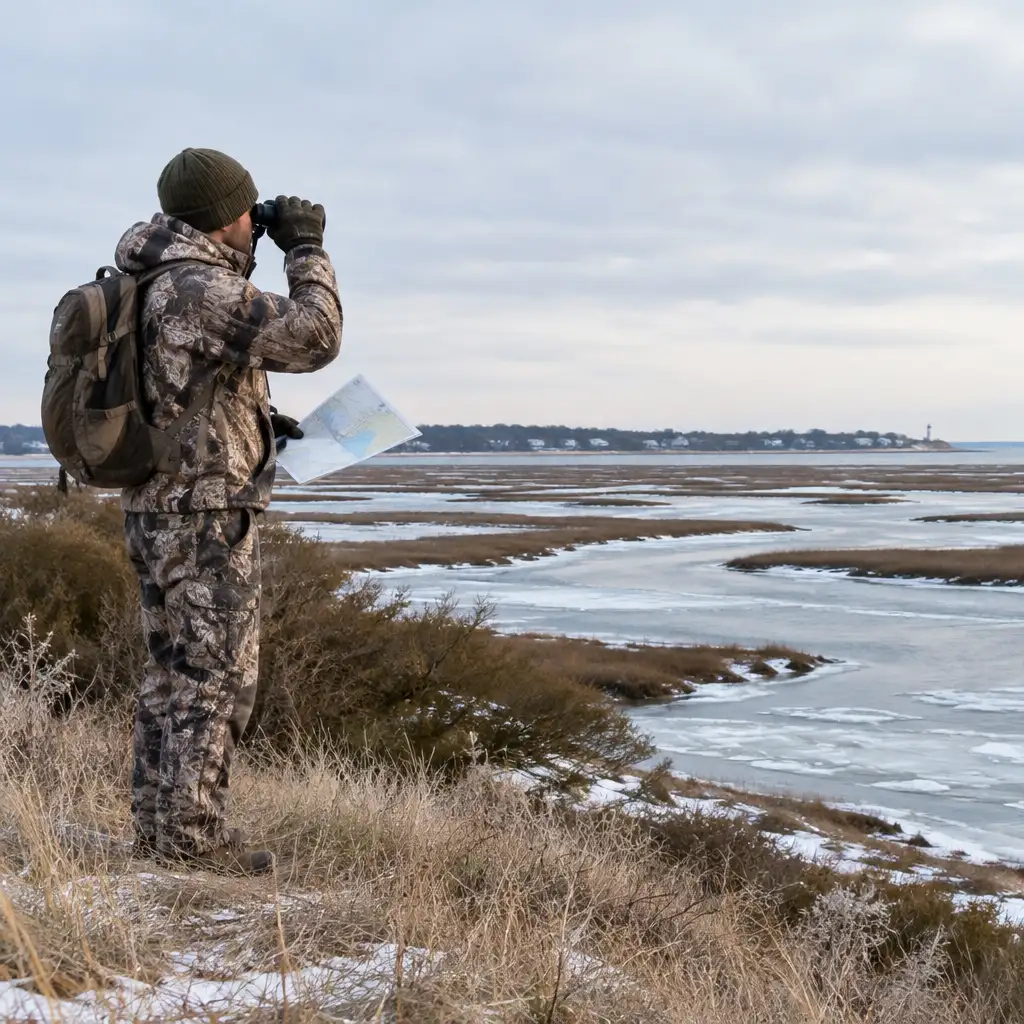
As the winter season approaches, hunters and guides who work Chatham’s salt marshes should begin planning how to scout safely and effectively for wintering waterfowl. Proper scouting in late fall prepares you for the colder months when tides, ice, and bird behavior change rapidly. For hunters focused on ducks, geese, and other marsh-dependent species, early preparation helps set realistic expectations for what the marsh will offer once winter fully arrives.
Chatham and the surrounding Cape Cod shoreline have a complex mix of tidal channels, mudflats, and sheltered pockets that hold birds on cold days. Reading those marshes requires an understanding of local tide cycles, where birds concentrate during wind events, and which flats will remain accessible when freeze-up begins. Now is the time to begin planning gear, scouting windows, and safety checks so that scouting trips in winter are productive and low-risk.
While many hunters look forward to time afield, conservation and safety should guide every decision. Disturbance of wintering birds can increase energetic stress during harsh weather, so efficient, low-impact scouting is better for both success and wildlife. For information about guided hunting and seasonal opportunities in the region, consider resources from Magic Fishing Charters; planning now will improve your winter fieldwork and compliance with regulations.
Reading Tides and Water Levels in Chatham Salt Marshes
Tides are the single most important factor when scouting coastal marshes. In Chatham, tidal ranges and the timing of high and low water determine which flats are exposed, which channels run deep, and where waterfowl will be concentrated. As the winter season approaches, watch tidal charts for spring and neap cycles, and note high-water events that submerge usual holding pockets. Low, clear days can expose mudflats that attract probing ducks, while high tides push birds into sheltered creeks and back-channel ponds.
Practical scouting starts with tide tables and a map. Identify low-tide flats within your scouting area and track how quickly they drain or fill. Some pockets that look promising at one tide will be disconnected or overly shallow at another. In colder stretches, freeze-up along the edges can change circulation and make shallow flats either more attractive or entirely unusable. Knowing when a channel remains navigable by foot or by small craft is essential to avoid getting cut off by a rising tide.
When planning a field session, build a tide buffer. Scout an hour or more before a predicted tide change and always have an exit route that stays above the expected high-water line. If you keep a simple tide log for a few local spots in Chatham, you will start to recognize patterns: which coves hold deeper water, which marsh spits drain quickly, and where wind-driven tides tend to pile water into a single basin. This locational knowledge is core local fishing and hunting expertise for Cape Cod marsh work.
Identifying Holding Areas and Feeding Pockets
Holding areas are the places waterfowl choose to rest when feeding opportunities on flats are limited. In Chatham salt marshes these include protected back channels, tidal ponds with access to open water, and sheltered lee sides of islands. As the season approaches, look for three consistent features: depth that prevents freezing too quickly, nearby food resources (such as eelgrass beds or exposed shellfish), and protection from prevailing wind. Birds trade off feeding and safety; use that behavior to narrow where to focus scouting time.
Feeding pockets tend to be transient. A wind event or cold snap can push birds from broad flats into narrow channels where they can find open water. Use aerial imagery—satellite maps or recent aerial photos—to locate eelgrass beds, shellfish flats, and persistent channels near mudflats. Combining map observations with in-person checks gives you the best chance of finding reliable pockets without disturbing birds repeatedly. When you spot a likely pocket, approach from a route that minimizes crossing open flats to reduce flushing birds unnecessarily.
Record your observations in a simple scouting notebook or mobile note app. Mark the time of day, tide stage, wind direction, and what species were present. Over several outings you will identify consistent holding areas and learn when those spots are likely to be productive. If you plan to hunt with a guide or a friend, sharing these notes can improve safety and reduce needless pressure on birds by avoiding repeated disturbance to the same sites.
Using Binoculars, Scopes, and Maps Effectively
Optics and maps are indispensable tools for winter scouting. A quality pair of binoculars lets you identify species at distance and determine flock behavior without causing disturbance. Use a spotting scope from a fixed vantage—dunes, bluffs, or established observation points—to watch how birds move with the tide. When the season approaches, practice quick identification of common winter species: where pintails, black ducks, or scoters typically hold will differ, and knowing those preferences speeds up decision-making in the field.
Combine optics with printed tide maps or annotated nautical charts. A folded paper map is a reliable backup when batteries run low; it also helps you plan approach and exit routes around channels. When you are on a higher vantage, scan for key visual signs: dark lines indicating channels, exposed shell middens that attract foraging birds, and patches of unfrozen water. Avoid using optics to zoom in on birds at extremely close distances that invite lingering and repeated checks—efficient observation is better for birds and for your scouting plan.
Technology can also help. Recent satellite imagery, tide apps, and local weather forecasts give context for same-day decisions. However, cross-check digital info with what you see at the marsh—conditions change quickly in winter. Practicing triangulation—using a map reference, landmark, and clocked observations through binoculars—helps you accurately mark productive pockets for future visits and ensures you are making decisions based on reliable, on-the-ground evidence.
Safety Around Soft Mud, Ice, and Tidal Channels
Safety should be the first consideration for every scouting trip. Winter marshes present hazards: soft mud, thin ice, and fast incoming tides that can strand you. Start with basic gear: wear insulated, waterproof boots with good traction, carry a wading staff for soft or uneven substrates, and wear a personal flotation device if you plan to access channels by boat. Always tell someone where you are going and when you expect to return; cell service is spotty in many marsh areas around Chatham.
Create and follow a simple safety checklist before every outing: check the tide table and wind forecast, pack extra layers and a headlamp, bring a charged phone and a paper map, and leave a trip plan with a friend. Be cautious on salt-marsh ice—what looks solid near the bank may be thin over channels. If you must traverse a frozen patch, test it carefully with your wading staff and avoid carrying additional weight that could increase risk. If your plan requires crossing wide flats, consider using a small, stable skiff to reduce time on soft mud.
Know the signs of hypothermia and cold-water shock, and keep a small emergency kit within reach. If you are scouting with others, agree on signals for regrouping and turning back. Local guides and seasoned hunters often have preferred extraction routes and safe observation points; when possible, consult with experienced local operators to learn those routes before you go. Safety is part of local fishing and hunting expertise—don’t let eagerness to locate birds override common-sense precautions.
When to Postpone Scouting or Hunting Due to Hazardous Conditions
There are clear conditions that should make you postpone fieldwork. Heavy freezing rain, gale-force winds, rapidly dropping temperatures that produce thin ice, or tidal forecasts that show unusually high water can make scouting hazardous and counterproductive. As the season approaches, now is the time to establish go/no-go criteria for your scouting outings. If travel routes are iced over, if visibility is poor, or if strong onshore winds are driving tides into locked channels, postpone and reassess the next safe window.
Beyond safety, consider wildlife welfare. Birds expend critical energy to stay warm in winter. Repeated disturbance during storms or sudden cold snaps can increase mortality risk. If you observe birds flushed repeatedly or groups showing signs of stress (disorganized movement, reluctance to feed), step back and avoid further interference. Ethical scouting values both human safety and the condition of the animals you hunt.
Postponing can be a strategic move. Use downtime to update maps, review tide patterns, and maintain equipment. Winter scouting is a season-long puzzle; sometimes passing on one outing preserves both your safety and the birds’ well-being while giving you clearer, safer opportunities in upcoming windows.
Minimizing Disturbance to Wintering Birds and Conservation Best Practices
Minimizing disturbance should be central to every scouting plan. Approach observation points quietly and use natural cover. Limit the number of visits to the same pocket—spread out scouting across multiple areas when possible. Use optics from higher vantage points instead of walking into feeding flats, and avoid chasing birds to see where they go. These practices reduce stress on wintering birds and increase the long-term productivity of local hunting areas.
Follow a simple conservation checklist: respect posted closures and private property, follow all state and federal regulations, and carry out any trash or spent shells. Record and share observations responsibly; reporting large concentrations of birds to local wildlife agencies can help with management, but avoid broadcasting precise locations on public forums during sensitive weather. When considering a guided option, a professional guide will emphasize conservation and legal compliance as part of the experience.
If you plan to coordinate with others, establish shared best practices: stagger scouting times, keep approach routes varied, and agree on quiet observation protocols. These cooperative measures protect bird populations and ensure that hunting remains sustainable. For hunters interested in guided experiences that emphasize safety and stewardship, guided duck hunts and responsible seasonal offerings can help you learn local protocols and ethical field behavior.
Frequently Asked Questions
Q1: When is the best time to start scouting marshes for winter waterfowl near Chatham?
A1: As the season approaches, now is the time to begin planning. Late fall scouting helps you learn tide patterns and identify likely holding pockets before the coldest weather arrives. Consistent note-taking across several outings will reveal reliable sites for winter.
Q2: What should I plan for when preparing a scouting trip or a guided hunt?
A2: Plan around tide windows, weather forecasts, and safety gear. Carry a tide chart, map, extra layers, and a communication plan. If you are new to the area, consider working with a local guide or organizer—Magic Fishing Charters and other local operators can help with seasonal planning and safety guidance.
Q3: How do guided hunts and charters handle regulations and safety in winter conditions?
A3: Licensed guides follow state regulations, federal migratory bird laws, and established safety practices, including gear checks, emergency planning, and conservative weather decision-making. Guided trips emphasize legal compliance, conservation, and realistic expectations regarding wildlife and weather.
Interested in offshore bluefin tuna fishing from Cape Cod? Magic Fishing Charters plans tuna trips around seasonal conditions, safety, regulations, and realistic expectations. Call 1-508-737-3367 or visit charterfishingcapecod.com to ask about upcoming tuna charter availability.