


Introduction
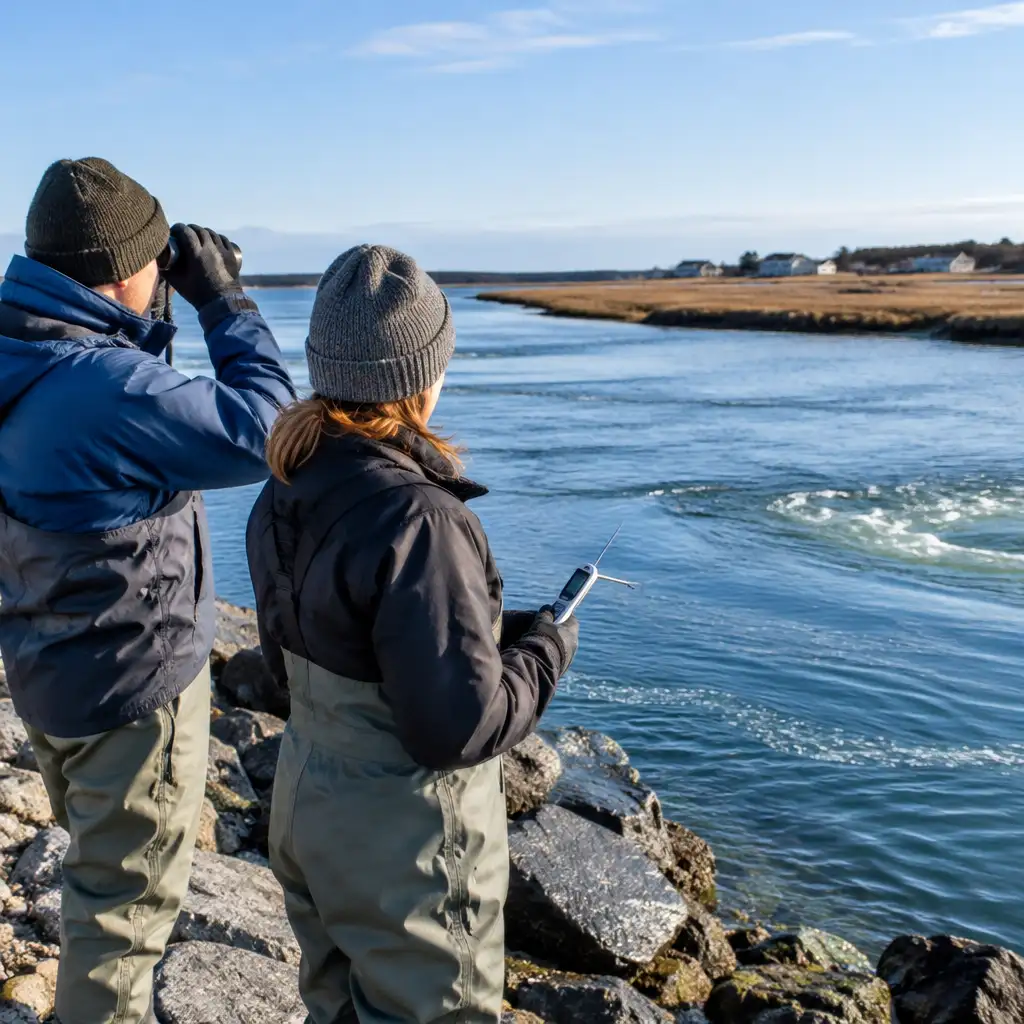
As spring approaches on Cape Cod, many anglers begin thinking ahead to the incoming striped bass migration. Now is the time to begin planning spring trips out of Chatham by using winter scouting to gather practical, local information. Observations made in estuaries and tidal creeks during the colder months can give anglers a head start on where bass are likely to stage and feed when water temperatures rise.
Winter scouting does not guarantee fish, but it gives realistic, experience‑driven clues that inform gear, timing, and safety choices for spring outings. Small details — bait presence, warm pockets of water, and tidal flow patterns — can separate an average day from a productive spring trip. Anglers who spend time observing now will better understand local patterns and set appropriate expectations before booking a charter or heading out themselves.
For those planning guided trips, local knowledge matters. If you are considering a guided option, Magic Fishing Charters provides experience‑driven advice on seasonal planning and Chatham fishing charters to help anglers match expectations to conditions. Careful winter observations paired with professional insight make spring striped bass fishing trips more efficient and enjoyable.
Reading Bait Movement in Estuaries and Tidal Creeks
Bait presence is a first‑order indicator for striped bass activity. In winter, bait species such as sand lance, silversides, juvenile herring, and small crustaceans often concentrate in protected creek mouths, deeper holes, and along warmer banks. Scan sheltered coves and creek mouths for surface boils, small seabird activity, or the ripple of schools moving along current lines — these are signs to record and revisit as spring approaches.
Use low‑impact methods to observe: glassing from shore, binocular surveys from a jetty, or a short, cautious slow run in a small skiff when conditions allow. Make simple notes on location, time of day, tidal stage, and the size and density of bait schools. Over several winter outings a pattern will usually emerge — certain creeks or edges consistently hold bait on a particular tidal stage, and those are your early spring survey sites.
Documenting bait species is also useful. Different baits attract bass at different times; for example, areas with concentrated sand lance can be early magnets for larger bass when water temperatures begin to climb. Keep a small notebook or phone log to track these observations; they form the baseline for spring scouting and route planning for chartered trips.
Identifying Water Temperature Pockets and Microclimates
Water temperature is a critical driver of striped bass behavior. Even in winter, subtle microclimates develop — sun‑facing shallows warmed by daytime radiation, deeper holes retaining slightly warmer water, and freshwater inflows that create temperature gradients. These pockets are often where bait and predator overlap first as spring arrives.
Portable thermometers or simple temperature loggers are invaluable tools for winter scouting. Take temperature readings at different depths and locations during the same outing to identify where the warmest water is holding. Note the time of day and weather conditions; sheltered creeks can warm quicker on sunny days, while open sounds retain cold water longer.
When you find a consistent warm pocket near a productive creek mouth, flag it for early spring checks. These pockets are natural holding areas for bait and can be predictable meeting points for arriving bass. Understanding microclimates also helps you choose tackle and bait sizes for the first few spring trips rather than arriving unprepared.
Tidal Use: Timing, Flow, and Where Bass Stage
Tides control where fish position themselves in estuaries and creeks. In winter scouting, pay attention to how current lines and flow speed change at different tidal stages. Bass frequently stage in transition zones: edges of runouts, along rips near creek mouths, inside sandbar ledges, and in pockets behind shallow structure during moving water.
Record which tidal stages concentrate bait in a particular creek. For example, some Chatham tidal creeks hold bait on a rising tide close to bank structure, while others concentrate forage on the ebb near the mouth. Knowing whether a spot fishes best on a rising, high, or falling tide lets you plan spring trips to hit peak feeding windows rather than wasting time during slack periods.
Use tide charts in conjunction with your winter notes and consider tidal range on spring days; larger spring tides can open up new holding water or shift the best approach angles. Local anglers and guides often use this combined knowledge of tide and topography to set baits where bass naturally funnel prey.
What to Look For: Visual and Sonar Signs in Winter
Winter scouting is largely observational. Look for surface activity like subtle boils, gull or tern congregations, and slicks where bait concentrates. On calm days, you can sometimes see schools of baitfish as dark patches beneath the surface. These visual cues are more reliable when recorded across repeated visits.
When safe and legal to do so, using low‑power electronics can speed up pattern recognition. A portable fishfinder used sparingly from a small boat can reveal bait pods, structure, and deeper holding areas without disturbing fish. Avoid overfishing or chasing every blip; the purpose of winter use is mapping and patterning, not immediate harvest.
Combine visual signs with other cues — a warm pocket near a visible bait slick or a current seam that concentrates minnows is a stronger lead than a single observation alone. This multi‑signal approach increases the odds that a winter‑scouted site will produce during the early spring window when striped bass return to Cape Cod estuaries.
Translating Winter Observations into Spring Trip Plans
Once you have a set of winter observations, convert them into a flexible plan for spring. Prioritize sites that repeatedly show bait, stable warm pockets, and favorable tidal staging. Create a short list of primary and backup locations to check on the first warm days; that short list reduces fuel time and increases time actively fishing.
For anglers booking a charter, share your notes with the captain. Guides appreciate local information and can pair your observations with broader knowledge of Nantucket Sound and Vineyard Sound conditions. If you prefer guided trips, contact a provider experienced in Chatham fishing charters to discuss how your scouting aligns with seasonal expectations and vessel options.
Plan gear and baits around what you observed. If bait was predominantly small silversides and sand lance, bring lighter plug and soft‑bait options and topwater choices for the early glass‑off days. If winter scouting found larger herring schools closer to deeper channels, be ready with heavier leaders and larger bait presentations for the first weeks of spring.
Safety, Conservation, and Local Regulations While Scouting
Safety is paramount during winter scouting. Cold water, slick rocks, and tidal shifts increase risk. Always check tides and weather before heading to a creek or jetty, wear appropriate flotation and clothing, and let someone know your plan. For shoreline scouting, stable viewing points and binoculars reduce personal risk and disturbance to fish and wildlife.
Conservation matters year‑round. Respect wildlife, avoid driving or trampling sensitive marshes, and minimize disturbance to resting birds and seals. Winter observations are most useful when they don’t interfere with natural behavior. The goal is long‑term healthy fisheries; ethical scouting and catch‑and‑release practices help ensure productive striped bass fishing seasons for future anglers.
Always follow Massachusetts fishing regulations and size/possession limits for striped bass. Regulations can change seasonally; consult official sources and discuss current rules with your charter operator. If you plan to hunt or take part in marine wildlife tours, be sure you understand the applicable regulations and safety guidance in advance.
Local Examples and Seasonal Notes for Chatham Waters
In Chatham, specific creeks and estuary edges often repeat patterns from year to year. Protected coves on the south side of the elbow and certain jetty edges near creek mouths can be early recipients of bait during mild spells. Observations in winter have shown that sheltered backwaters with a steady food supply see fish return sooner as the season approaches.
Keep an eye on conditions in Nantucket Sound and Vineyard Sound as well — large‑scale bait movement and warming in these broader areas often precede estuary arrivals. Winter scouting paired with watchful tracking of bay and sound temperatures helps you pick the first few days to check your winter‑flagged sites.
Whether you plan a private outing or a guided trip, early communication with a charter operator improves outcomes. Discuss your winter findings with an experienced guide, and they can recommend the best boat, bait, and timing for spring. Local fishing charters are familiar with both inshore nuances and how offshore conditions influence nearshore arrivals.
Frequently Asked Questions
Q: When should I start scouting estuaries for striped bass?
A: As the season approaches, winter scouting is most useful from late winter into early spring. Begin noting bait presence, temperature pockets, and tidal behavior now so you have a practical checklist to reference when spring conditions arrive.
Q: How should I incorporate scouting notes into planning a charter or trip?
A: Share your observations with the charter operator when booking. A guide can combine your local notes with broader knowledge of Cape Cod fishing charters to select the best time and boat type. Planning your fishing trip around documented bait and tide windows increases efficiency and sets realistic expectations.
Q: Will scouting in winter affect wildlife tours or duck hunting plans?
A: Winter scouting should be done responsibly to avoid disturbing wildlife. If your plans include marine wildlife tours or guided duck hunts, coordinate timing and locations with the tour or hunt operator and adhere to regulations. Many operators can advise on low‑impact scouting practices that support conservation and safety.
For more detailed local guidance and seasonal trip options, consider contacting a local operator who can translate winter scouting into an actionable spring plan. Professional guidance helps bridge the gap between observation and on‑water success without promising outcomes that depend on changing conditions.
The best Cape Cod fishing experiences often begin with good planning. Whether you are looking ahead to striped bass season, bluefish action, offshore tuna trips, or a family-friendly day on the water, Magic Fishing Charters can help you understand what to expect as the season approaches. Call 1-508-737-3367 to start planning your trip.